PaperFoxPaperFox
Reviewers

Reviewer Workflow

Step-by-step workflow guide for reviewers in PaperFox

As a reviewer, you play a crucial role in maintaining conference quality by providing expert evaluation of submitted papers. This guide walks you through the complete reviewer experience from invitation to final review submission.

🎯 Getting Started as a Reviewer

1. Receiving Review Invitations

Invitation Process:

  • Track chairs or conference chairs invite you via email
  • Invitations include conference details, track information, and expected workload
  • You have 15 days to respond to invitations
  • Invitations specify review deadlines and requirements

Email Invitation Contents:

  • Conference name and track information
  • Expected number of papers to review
  • Review timeline and deadlines
  • Link to accept or decline the invitation
  • Track chair contact information

2. Accepting Review Invitations

Response Options:

  1. Accept Invitation:

    • Click the accept link in your email
    • Create a PaperFox account if you don't have one
    • Confirm your expertise areas and availability
    • Review the conference scope and requirements
  2. Decline Invitation:

    • Click the decline link if you cannot commit
    • Provide a brief reason (optional)
    • Suggest alternative reviewers if possible

After Accepting:

  • You'll receive access to the reviewer dashboard
  • Track chairs will assign specific papers to you
  • You'll be notified when assignments are made
  • Review forms and guidelines will be provided

📋 Understanding Your Responsibilities

Core Reviewer Duties

  • Thorough Evaluation: Provide comprehensive, fair assessment
  • Timely Reviews: Complete reviews by specified deadlines
  • Constructive Feedback: Offer helpful suggestions for improvement
  • Confidentiality: Maintain strict confidentiality of review materials
  • Professional Conduct: Communicate respectfully with all parties

Review Standards

  • Objectivity: Evaluate work based on merit, not personal preferences
  • Thoroughness: Read papers carefully and completely
  • Fairness: Provide balanced assessment of strengths and weaknesses
  • Constructiveness: Focus on helping authors improve their work
  • Expertise: Only review papers within your area of expertise

🔍 Review Assignment Process

1. Receiving Review Assignments

Assignment Notification:

  • You'll receive email notifications when papers are assigned
  • Assignments appear in your reviewer dashboard (accessible from your account menu)
  • Each assignment includes paper access and deadline information
  • Contact track chairs immediately if you have conflicts of interest

Assignment Information Includes:

  • Paper title and abstract
  • Submission files and supplementary materials
  • Review form and evaluation criteria
  • Review deadline (typically 2-4 weeks)
  • Track chair contact information

2. Managing Your Review Assignments

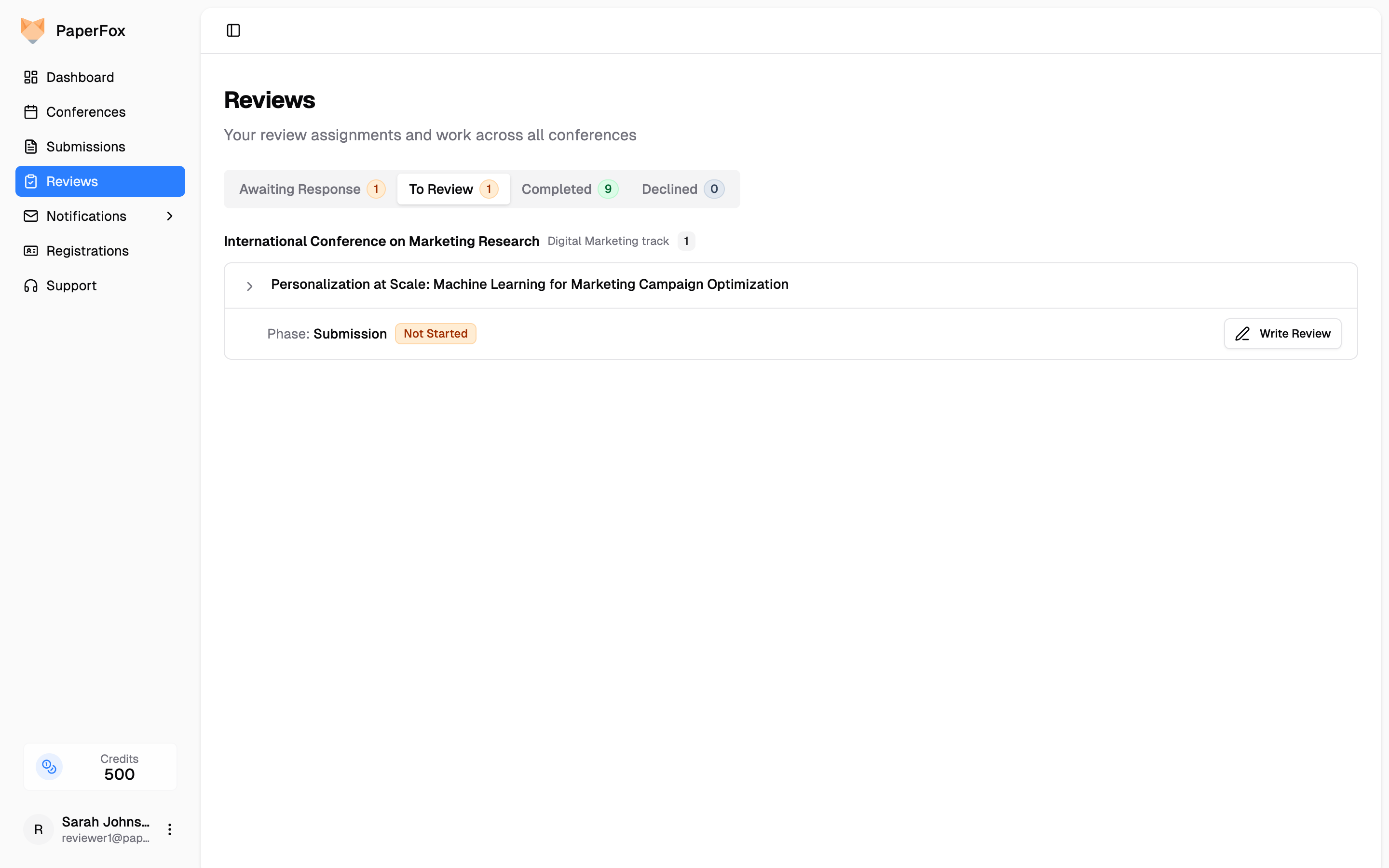
Access your reviewer dashboard through your account menu to view all assignments organized by status:

Assignment Statuses:

  • Assigned: New assignments awaiting your response
  • In Progress: Assignments you've accepted and are working on
  • Completed: Reviews you've submitted
  • Declined: Assignments you've declined

Dashboard Features:

  • View all current and past assignments
  • Track review deadlines and progress
  • Access paper files and review forms
  • Communicate with track chairs
  • Update assignment status

3. Responding to Assignments

Assignment Response Options:

  1. Accept Assignment:

    • Click "Accept" on the assignment
    • Confirms your commitment to review
    • Gives you access to full paper materials
    • Starts the review process
  2. Decline Assignment:

    • Click "Decline" if you cannot review
    • Provide a reason (conflict of interest, expertise mismatch, availability)
    • Track chairs will reassign to another reviewer

Important Considerations:

  • Accept only papers within your expertise
  • Ensure you can meet the deadline
  • Check for any conflicts of interest
  • Contact track chairs with questions

📝 Conducting the Review

1. Accessing Review Materials

Paper Access:

  • Download paper PDF and supplementary materials
  • Review any special instructions from track chairs
  • Note the review form structure and evaluation criteria
  • Check submission guidelines to understand requirements

Review Preparation:

  • Set aside sufficient time for thorough review (typically 2-4 hours)
  • Review the conference's scope and standards
  • Familiarize yourself with the review form
  • Prepare to take detailed notes while reading

2. Paper Evaluation Process

Step-by-Step Review Process:

Initial Reading (30 minutes):

  1. Read the abstract and introduction
  2. Skim the entire paper to understand structure
  3. Identify the main contributions claimed
  4. Assess relevance to conference track

Detailed Analysis (60-90 minutes):

  1. Technical Quality Assessment:

    • Evaluate methodology and experimental design
    • Check data analysis and statistical methods
    • Assess validity of conclusions
    • Verify reproducibility information
  2. Novelty and Significance:

    • Determine originality of contribution
    • Assess advancement beyond existing work
    • Evaluate potential impact on the field
    • Consider practical applications
  3. Clarity and Presentation:

    • Evaluate writing quality and organization
    • Check figure and table clarity
    • Assess overall paper structure
    • Note any presentation issues
  4. Relevance Assessment:

    • Confirm fit with conference scope
    • Evaluate interest to target audience
    • Consider timeliness and current relevance

Critical Analysis (30-60 minutes):

  • Identify strengths and weaknesses
  • Formulate specific improvement suggestions
  • Prepare constructive feedback
  • Determine overall recommendation

3. Using the Review Form

Review Form Components:

Scoring Sections:

  • Technical Quality (1-5 scale): Methodology, analysis, validity
  • Novelty and Significance (1-5 scale): Originality, contribution, impact
  • Clarity and Presentation (1-5 scale): Writing, figures, organization
  • Relevance to Conference (1-5 scale): Scope fit, audience interest

Text Feedback Sections:

  • Summary: Brief overview of the paper's contribution (2-3 sentences)
  • Strengths: What the paper does well (specific examples)
  • Weaknesses: Areas needing improvement (specific, actionable feedback)
  • Comments for Authors: Detailed feedback for improvement
  • Confidential Comments: Private notes for track chairs only

Overall Assessment:

  • Recommendation: Accept/Minor Revisions/Major Revisions/Reject
  • Confidence Level (1-5): How confident you are in your assessment

✍️ Writing Effective Reviews

1. Review Structure and Content

Summary Section:

  • Provide a concise summary of the paper's main contributions
  • Demonstrate that you understood the work
  • Help authors see how their work is perceived
  • Keep to 2-3 sentences

Strengths Section:

  • Highlight what the paper does well
  • Be specific with examples
  • Acknowledge good methodology, insights, or writing
  • Recognize significant contributions

Weaknesses Section:

  • Identify areas needing improvement
  • Focus on fixable issues when possible
  • Be specific about problems and provide examples
  • Suggest potential solutions or improvements

Detailed Comments:

  • Provide page/line specific feedback
  • Offer technical corrections and clarifications
  • Suggest improvements for figures and tables
  • Include minor issues like typos or formatting

2. Writing Best Practices

Be Constructive:

  • Focus on improving the work, not just criticizing
  • Suggest specific improvements where possible
  • Acknowledge the authors' effort and intent
  • Maintain a respectful and professional tone

Be Specific:

  • Reference specific sections, figures, or line numbers
  • Provide concrete examples of issues
  • Explain the reasoning behind your criticisms
  • Offer actionable feedback that authors can implement

Be Balanced:

  • Include both strengths and weaknesses
  • Avoid purely negative reviews
  • Recognize good aspects even in papers you recommend rejecting
  • Maintain objectivity throughout

Be Professional:

  • Use respectful language throughout your review
  • Avoid personal attacks or dismissive comments
  • Focus on the work itself, not the authors
  • Maintain academic standards and courtesy

3. Common Review Mistakes to Avoid

Inadequate Reviews:

  • Don't submit brief or superficial reviews
  • Avoid generic comments that could apply to any paper
  • Don't focus only on grammar and typos
  • Ensure you address all major aspects of the work

Inappropriate Content:

  • Never include personal attacks or unprofessional language
  • Don't reveal your identity in double-blind reviews
  • Avoid demanding changes outside the paper's scope
  • Don't reject papers solely based on topic preferences

Technical Errors:

  • Don't review papers outside your expertise area
  • Avoid making factual errors in your assessment
  • Don't misunderstand the paper's contributions
  • Ensure your technical criticisms are accurate

📤 Submitting Your Review

1. Review Completion Process

Before Submitting:

  1. Review Completeness Check:

    • Ensure all required sections are completed
    • Verify scoring is consistent with written feedback
    • Check that comments are constructive and specific
    • Confirm overall recommendation aligns with assessment
  2. Quality Review:

    • Read through your entire review
    • Check for typos and clarity issues
    • Ensure feedback is professional and helpful
    • Verify you've addressed all major paper aspects
  3. Final Verification:

    • Confirm deadline compliance
    • Check that confidential comments are appropriate
    • Ensure you haven't revealed your identity (if double-blind)
    • Save a copy for your records

2. Submission and Follow-up

Submitting Your Review:

  1. Click "Submit Review" when ready
  2. Confirm submission in the interface
  3. Receive confirmation email
  4. Review becomes available to track chairs

Post-Submission:

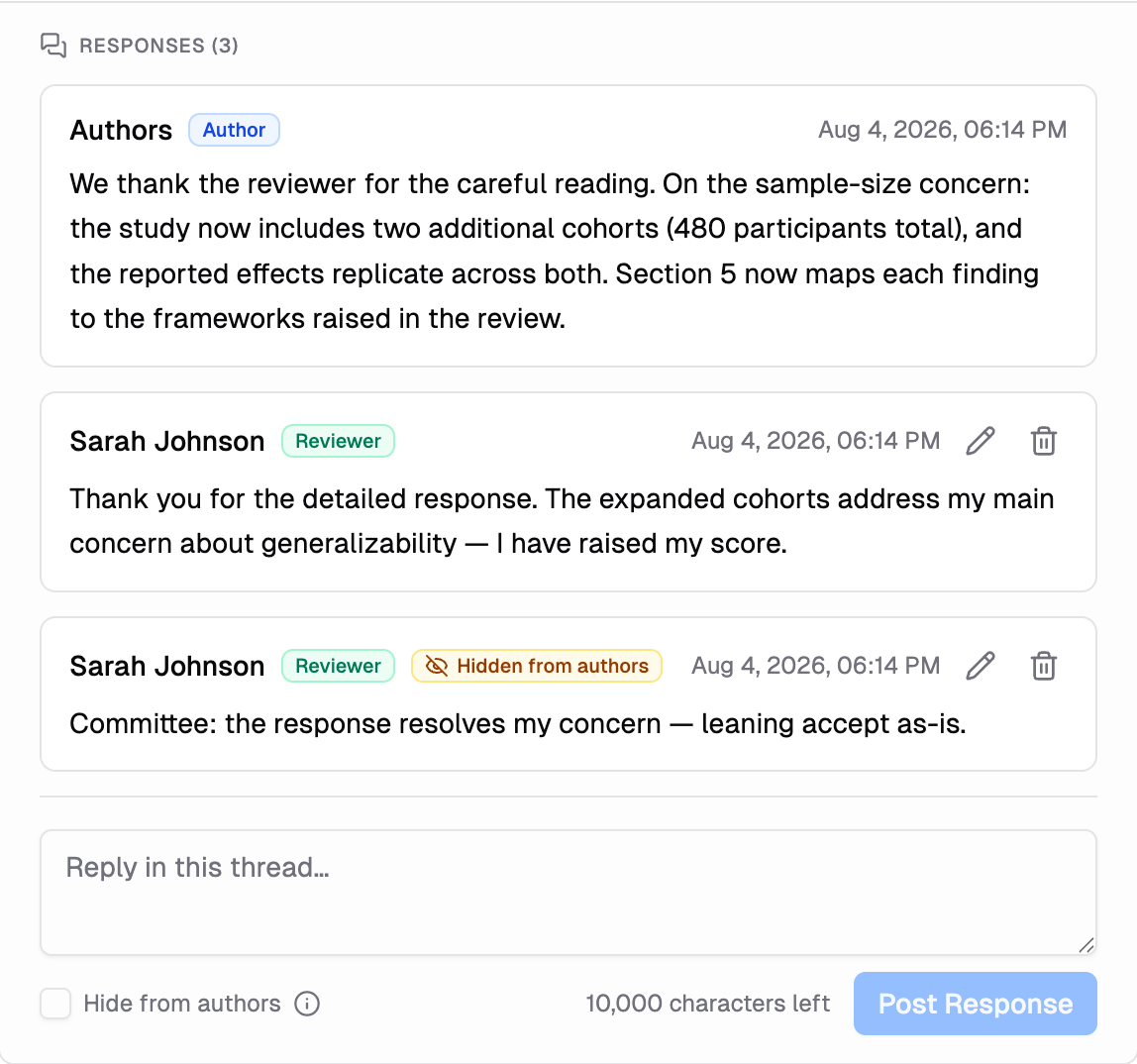
  • You may be asked to participate in reviewer discussions
  • Track chairs might request clarifications
  • You may be invited to review revised versions
  • Maintain availability for follow-up questions

💬 Review Discussion Phase

1. Participating in Discussions

When Discussions Occur:

  • For papers with conflicting reviews
  • When track chairs need clarification
  • To reach consensus on borderline papers
  • To discuss significant concerns

Discussion Process:

  • Track chairs initiate discussions via email or platform
  • You may be asked to elaborate on your review
  • Engage respectfully with other reviewers' perspectives
  • Focus on the paper's merits, not personal opinions

2. Updating Your Assessment

When Updates May Be Needed:

  • After discussing with other reviewers
  • If you discover errors in your initial review
  • When additional information becomes available
  • If track chairs request clarification

Update Process:

  • Contact track chairs to request review updates
  • Provide clear reasoning for any changes
  • Submit revised assessment if permitted
  • Maintain consistency with your core evaluation

📊 Managing Multiple Assignments

1. Workload Management

Planning Your Review Schedule:

  • Track all assignment deadlines carefully
  • Allocate appropriate time for each review (2-4 hours)
  • Start reviews early to avoid last-minute rush
  • Balance multiple assignments effectively

Time Management Tips:

  • Use calendar reminders for deadlines
  • Set personal deadlines before official ones
  • Break review process into manageable steps
  • Maintain consistent review quality standards

2. Communication with Track Chairs

When to Contact Track Chairs:

  • If you cannot meet a deadline
  • When you discover conflicts of interest
  • If you need clarification on review criteria
  • For technical issues or paper access problems

Professional Communication:

  • Respond promptly to track chair inquiries
  • Provide clear explanations for any issues
  • Ask questions when uncertain about requirements
  • Maintain professional tone in all interactions

🏆 Reviewer Recognition and Development

1. Building Your Review Portfolio

Maintaining Review Records:

  • Keep track of conferences you've reviewed for
  • Note your areas of expertise and interests
  • Document your review experience and training
  • Build relationships with track chairs and conferences

2. Continuous Improvement

Developing Review Skills:

  • Seek feedback on your review quality
  • Learn from experienced reviewers
  • Attend reviewer training sessions when available
  • Stay current with best practices in your field

Professional Development:

  • Participate in conference committees
  • Consider becoming a track chair
  • Contribute to reviewer training programs
  • Share expertise with junior reviewers

🚨 Common Challenges and Solutions

Time Management Issues

  • Problem: Multiple reviews due simultaneously
  • Solution: Plan ahead, set personal deadlines, start early

Technical Difficulties

  • Problem: Cannot access papers or submission system
  • Solution: Contact track chairs immediately, use alternative access methods

Expertise Mismatches

  • Problem: Assigned papers outside your expertise
  • Solution: Decline assignments promptly, suggest alternative reviewers

Quality Concerns

  • Problem: Uncertain about review quality or standards
  • Solution: Request guidelines from track chairs, seek mentor feedback

Conflicting Opinions

  • Problem: Your review differs significantly from other reviewers
  • Solution: Participate in discussion, explain your reasoning, remain open to other perspectives

Reviewer Quality Checklist

Before Submitting Any Review:

  • ✅ Read the entire paper thoroughly
  • ✅ Evaluated all technical aspects within my expertise
  • ✅ Provided specific, actionable feedback
  • ✅ Maintained professional and respectful tone
  • ✅ Balanced strengths and weaknesses
  • ✅ Scoring aligns with written feedback
  • ✅ Comments are constructive and helpful
  • ✅ Reviewed for typos and clarity
  • ✅ Met all deadline requirements
  • ✅ Maintained appropriate confidentiality

Quality reviewing is essential for maintaining conference standards and helping authors improve their work. Your expert evaluation contributes significantly to the advancement of academic research.

On this page